 EuroTripr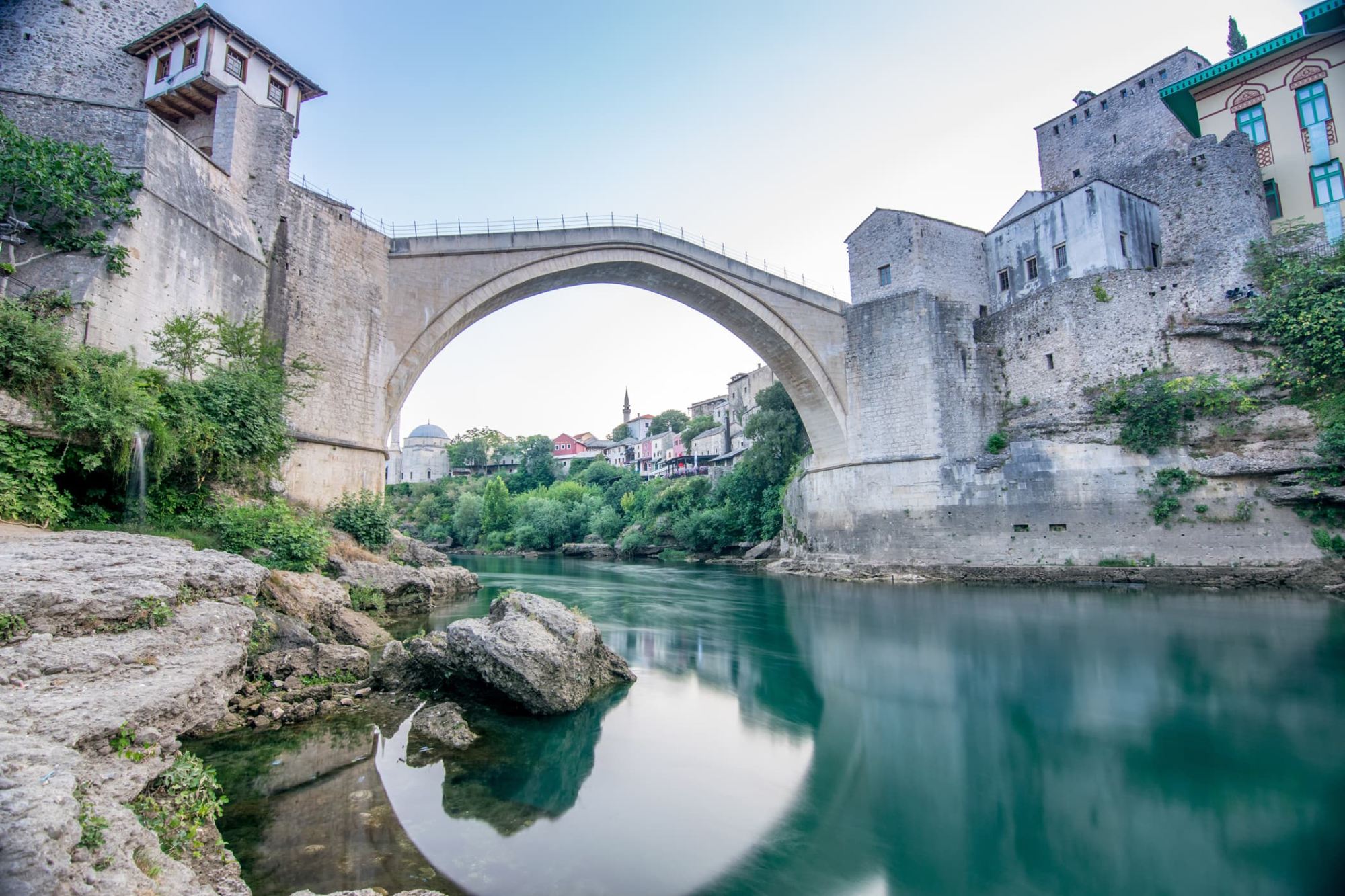
Sarajevo is where East meets West. Ottoman mosques sit next to Catholic churches and Orthodox cathedrals. The old town (Baščaršija) has narrow streets, bazaars, and Turkish coffee shops. You can still see bullet holes in buildings and the famous "Sarajevo roses" (red resin filling in the holes left by mortar shells). The Tunnel Museum tells the story of the tunnel that kept the city alive during the siege (1992-1996). Sarajevo is beautiful, tragic, and resilient.
The assassination of Archduke Franz Ferdinand (which sparked WWI) happened here in 1914. There's a plaque marking the spot.
Sarajevo is cheap. Hostels run $8-15/night. A meal at a restaurant is $5-8. A coffee is $1.
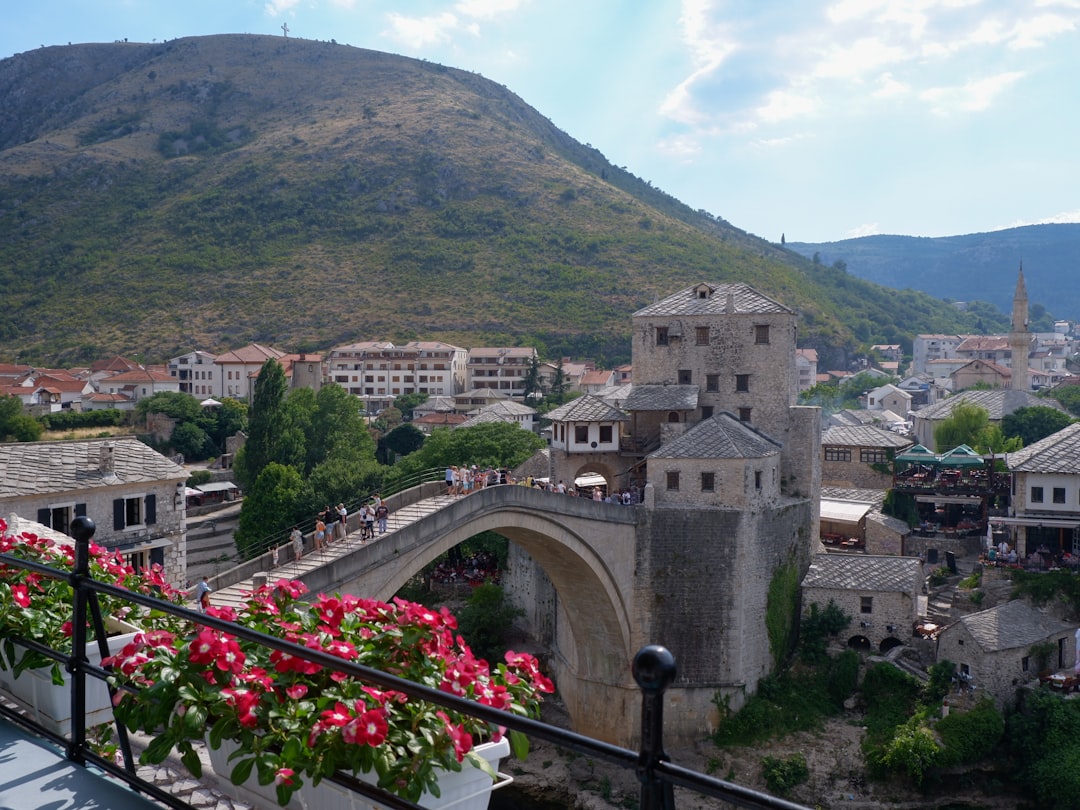
Mostar is the most famous city in Bosnia. The Stari Most (Old Bridge) is a 16th-century Ottoman bridge that was destroyed in the war and rebuilt in 2004. Young men dive off the bridge into the river below (for tips from tourists). The old town has mosques, bazaars, and Ottoman-era buildings. Mostar is touristy but beautiful.
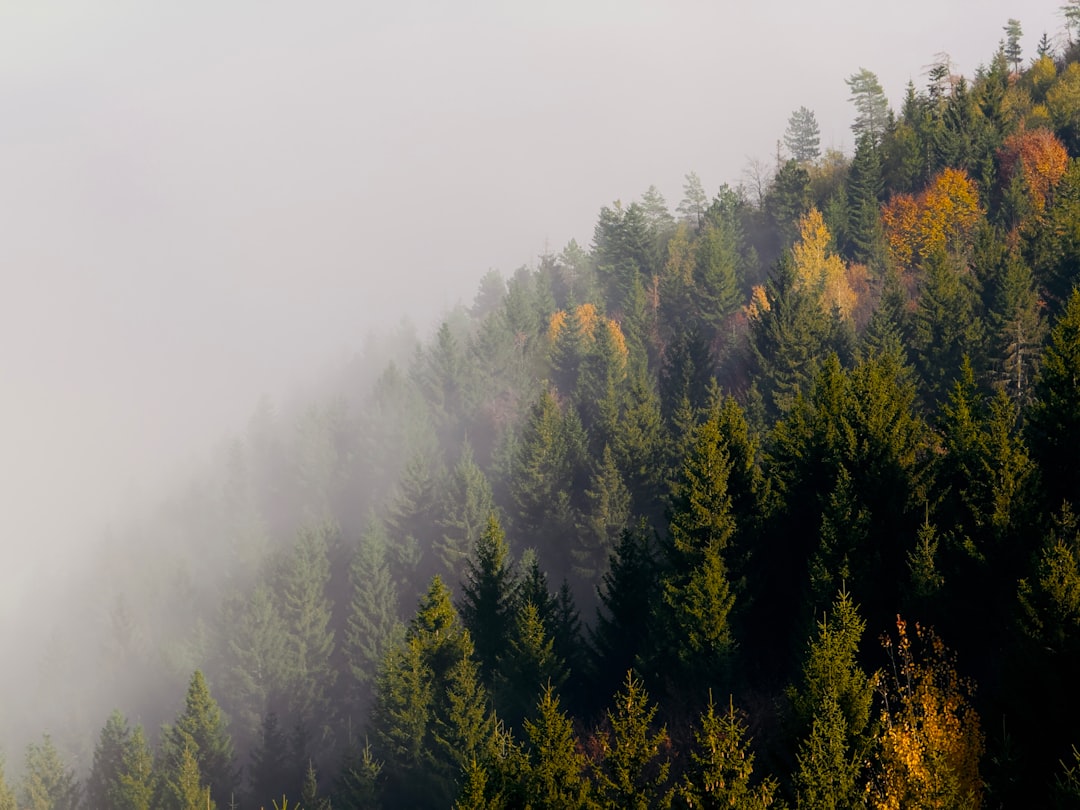
The countryside has waterfalls, rivers, and mountains. Kravice Waterfalls near Mostar are stunning and popular in summer. The Neretva River near Mostar is turquoise and great for rafting. The mountains are beautiful for hiking but many areas still have landmines (stick to marked trails).
Bosnian food is a mix of Ottoman and Balkan influences. Ćevapi (grilled minced meat). Burek (savory pastry with meat or cheese). Bosanski lonac (Bosnian pot, a meat and vegetable stew). Turkish coffee is everywhere.
Bosnian people are warm, hospitable, and proud. They've been through a lot (the war ended less than 30 years ago), and they're resilient. English is common among younger people.
Getting around is straightforward. Buses connect cities. If you want to explore the countryside, rent a car (but be cautious of landmines in rural areas).
Bosnia is one of the cheapest countries in Europe. Hostels run $8-15/night. A meal at a restaurant is $5-8. A beer is $1-2.
When to go: Spring (April-May) and fall (September-October) are mild and less crowded. Summer (June-August) is warm and popular for waterfalls and rafting. Winter (November-March) is cold, and skiing is possible in the mountains.
Bosnia is beautiful, tragic, and authentic. If you want to see a country that's still healing but full of life, go.
Bosnia And Herzegovina Travel Guide
Bosnia and Herzegovina has a complex history, beautiful landscapes, and incredibly cheap prices. Sarajevo (the capital) is where East meets West with Ottoman mosques, Austro-Hungarian architecture, and scars from the 1990s war. Mostar has the iconic Stari Most (Old Bridge) and a charming old town. The countryside has mountains, waterfalls, and rivers. The war is recent (1992-1995), and you'll see bullet holes and war damage still. Bosnian people are warm and resilient. It's one of the cheapest countries in Europe. If you want history, nature, and authenticity, Bosnia delivers.
Overview
Bosnia And Herzegovina Costs
See something wrong or missing? Help update ✏️ costs for Bosnia And Herzegovina.
💰 Cost Per Day
No data yet — be the first! ✏️
🎒💵 Cost Per Day - Backpacker
No data yet — be the first! ✏️
👨👩👧👦💵 Cost Per Day - Family
No data yet — be the first! ✏️
💰🤑 Cost Per Day - Luxury
No data yet — be the first! ✏️
🛌 Sleeping
No data yet — be the first! ✏️
🏕️ Camping (per Day)
No data yet — be the first! ✏️
🏕️ Camping (per Week)
No data yet — be the first! ✏️
🏕️ Camping (per Month)
No data yet — be the first! ✏️
🍝 Food
No data yet — be the first! ✏️
🍳 Breakfast (for 1)
No data yet — be the first! ✏️
👨👩👧👦🍳 Breakfast (family)
No data yet — be the first! ✏️
🍔 Lunch (for 1)
No data yet — be the first! ✏️
👨👩👧👦🍔 Lunch (family)
No data yet — be the first! ✏️
🍽 Dinner (for 1)
No data yet — be the first! ✏️
👨👩👧👦🍽 Dinner (family)
No data yet — be the first! ✏️
☕️ Coffee
No data yet — be the first! ✏️
🥤 Coca Cola (0.3L)
No data yet — be the first! ✏️
🥪 Sandwich
No data yet — be the first! ✏️
🥖 Bread
No data yet — be the first! ✏️
🍿 Snacks
No data yet — be the first! ✏️
🍺 Beer (0.5L)
No data yet — be the first! ✏️
🍷 Wine (glass)
No data yet — be the first! ✏️
🍾 Wine (bottle)
No data yet — be the first! ✏️
💧 Water (bottle)
No data yet — be the first! ✏️
🍕 Street Food (for 1)
No data yet — be the first! ✏️
🚙 Transportation
No data yet — be the first! ✏️
🚙 Car Rental (per Day)
No data yet — be the first! ✏️
🚙 Car Rental (per Week)
No data yet — be the first! ✏️
🚙 Car Rental (per Month)
No data yet — be the first! ✏️
🚂🎟️ Train Ticket (single)
No data yet — be the first! ✏️
🚌🎟️ City-to-City Bus Ticket (single)
No data yet — be the first! ✏️
⛽️ Gas/Fuel
No data yet — be the first! ✏️
🚧 Tolls
No data yet — be the first! ✏️
🚊🎟️ City Transit Pass
No data yet — be the first! ✏️
🛬🚌 Airport Transfer
No data yet — be the first! ✏️
📸 Sightseeing
No data yet — be the first! ✏️
🎟 Museum Entry
No data yet — be the first! ✏️
🏰 Attraction Entry
No data yet — be the first! ✏️
🚶♂️ Guided Tours
No data yet — be the first! ✏️
💶 Other
No data yet — be the first! ✏️
👨💻 Co-working
No data yet — be the first! ✏️
🧼 Laundry
No data yet — be the first! ✏️
💁♂️💶 Tipping
No data yet — be the first! ✏️
📲 Mobile Data (~10GB)
No data yet — be the first! ✏️
🛰️ Luggage Storage / Locker (daily)
No data yet — be the first! ✏️
Bosnia And Herzegovina Scores
See something wrong or missing? Help update ✏️ scores for Bosnia And Herzegovina.
🤩 Overall Score
No data yet — be the first! 🗳️
💵 Cost
No data yet — be the first! 🗳️
💵 Income Level
No data yet — be the first! 🗳️
🌡 Temperature (Now)
No data yet — be the first! 🗳️
🌡 Temperature (Average)
No data yet — be the first! 🗳️
🌦 Weather
No data yet — be the first! 🗳️
💧 Humidity (Now)
No data yet — be the first! 🗳️
💧 Humidity (Average)
No data yet — be the first! 🗳️
☔️ Rain (Annual)
No data yet — be the first! 🗳️
☀️ Sunshine (Hours Per Day)
No data yet — be the first! 🗳️
💨 Wind
No data yet — be the first! 🗳️
🦹♂️ Safety
No data yet — be the first! 🗳️
🚙 Traffic Safety
No data yet — be the first! 🗳️
👩🏻 Female Friendly
No data yet — be the first! 🗳️
✌️ Peace (No Wars / Political Conflict)
No data yet — be the first! 🗳️
🎉 Fun
No data yet — be the first! 🗳️
💃 Nightlife
No data yet — be the first! 🗳️
😘 For Singles
No data yet — be the first! 🗳️
👩❤️👨 For Couples
No data yet — be the first! 🗳️
👨👩👧👦 Family Score
No data yet — be the first! 🗳️
🚶♂️ Walkability
No data yet — be the first! 🗳️
🚶♂️ Easy To Get Around
No data yet — be the first! 🗳️
👨🦽 Accessibility
No data yet — be the first! 🗳️
📡 Internet
No data yet — be the first! 🗳️
📡 Free Wifi
No data yet — be the first! 🗳️
👨💻 Co-working Places
No data yet — be the first! 🗳️
❄️ A/C
No data yet — be the first! 🗳️
🏥 Hospitals
No data yet — be the first! 🗳️
😃 Happiness
No data yet — be the first! 🗳️
🤝 Friendliness
No data yet — be the first! 🗳️
🤗 Hospitality
No data yet — be the first! 🗳️
🇬🇧 English Speaking
No data yet — be the first! 🗳️
👱♂️👨🏾 Racial Tolerance
No data yet — be the first! 🗳️
🏳️🌈 LGBTQ+ Friendly
No data yet — be the first! 🗳️
🎓 Education Level
No data yet — be the first! 🗳️
🧹 Clean
No data yet — be the first! 🗳️
👍 Rated By Members
No data yet — be the first! 🗳️
👍 Liked By Eurotriprs
No data yet — be the first! 🗳️
Average monthly weather for Bosnia And Herzegovina
| Monthly Averages | Jan | Feb | Mar | Apr | May | Jun | Jul | Aug | Sep | Oct | Nov | Dec |
|---|---|---|---|---|---|---|---|---|---|---|---|---|
| Weather | ❄️ Snowy | ❄️ Snowy | ❄️ Snowy | ❄️ Snowy | 🌦️ Sun & Rain | 🌦️ Sun & Rain | 🌦️ Sun & Rain | 🌦️ Sun & Rain | 🌦️ Sun & Rain | 🌦️ Sun & Rain | ❄️ Snowy | ❄️ Snowy |
| Avg. Temp. | 22° F 🥶 Freezing | 26° F 🥶 Freezing | 29° F 🥶 Freezing | 37° F ⛄️ Cold | 44° F ⛄️ Cold | 55° F 😰 Cool | 58° F 😰 Cool | 58° F 😰 Cool | 49° F 😰 Cool | 42° F ⛄️ Cold | 33° F ⛄️ Cold | 26° F 🥶 Freezing |
| Feels Like | 15° F 🥶 Freezing | 19° F 🥶 Freezing | 23° F 🥶 Freezing | 31° F 🥶 Freezing | 40° F ⛄️ Cold | 52° F 😰 Cool | 56° F 😰 Cool | 56° F 😰 Cool | 46° F 😰 Cool | 37° F ⛄️ Cold | 27° F 🥶 Freezing | 20° F 🥶 Freezing |
| High Temp. | 28° F | 33° F | 36° F | 45° F | 52° F | 62° F | 65° F | 66° F | 57° F | 49° F | 39° F | 32° F |
| Low Temp. | 16° F | 20° F | 22° F | 29° F | 37° F | 47° F | 50° F | 50° F | 43° F | 36° F | 28° F | 21° F |
| Sunrise | 06:17 am | 05:47 am | 04:58 am | 04:04 am | 03:22 am | 03:06 am | 03:21 am | 03:54 am | 04:28 am | 05:04 am | 05:43 am | 06:15 am |
| Sunset | 03:37 pm (15:37) | 04:17 pm (16:17) | 04:55 pm (16:55) | 05:32 pm (17:32) | 06:08 pm (18:08) | 06:31 pm (18:31) | 06:26 pm (18:26) | 05:50 pm (17:50) | 04:58 pm (16:58) | 04:04 pm (16:04) | 03:23 pm (15:23) | 03:13 pm (15:13) |
| Sunlight | ☀️ 5h | ☀️ 6h | ☀️ 8h | ☀️ 10h | ☀️ 11h | ☀️ 13h | ☀️ 13h | ☀️ 12h | ☀️ 10h | ☀️ 8h | ☀️ 6h | ☀️ 5h |
| Sunny Days | 15 | 17 | 22 | 25 | 27 | 28 | 30 | 30 | 27 | 25 | 17 | 15 |
| Clouds | 70% | 69% | 65% | 62% | 66% | 47% | 35% | 40% | 51% | 56% | 69% | 69% |
| Humidity | 💦 80% | 💦 80% | 💦 77% | 😥 73% | 💦 77% | 😥 73% | 😥 69% | 😥 69% | 💦 76% | 💦 76% | 💦 83% | 💦 82% |
| Rain | 1 in. (4 Days) | 2 in. (6 Days) | 2 in. (7 Days) | 3 in. (11 Days) | 5 in. (20 Days) | 3 in. (15 Days) | 3 in. (13 Days) | 3 in. (12 Days) | 3 in. (12 Days) | 3 in. (9 Days) | 5 in. (10 Days) | 3 in. (7 Days) |
| Snow | 25 in. (11 Days) | 17 in. (8 Days) | 16 in. (9 Days) | 11 in. (5 Days) | 1 in. (1 Days) | 0 in. (0 Days) | 0 in. (0 Days) | 0 in. (0 Days) | 0 in. (0 Days) | 3 in. (1 Days) | 12 in. (5 Days) | 22 in. (8 Days) |
| Wind | 3.92 mph | 4.24 mph | 4.46 mph | 4.51 mph | 4.23 mph | 3.74 mph | 3.72 mph | 3.62 mph | 3.84 mph | 3.84 mph | 3.84 mph | 3.85 mph |
| Last updated on: Apr 2026 | Source: Open Meteo | |||||||||||
⚠️ Weather and climate is for monthly averages for Bosnia And Herzegovina. Current weather and temperatures might be different on any given day. This table is for planning purposes. Please check current weather forecasts before your trip.

Bosnia And Herzegovina
A bridge over a river with a bunch of flowers in front of it
Photo by Addie Peck on Unsplash

Bosnia And Herzegovina
A river with Mostar on the other side of it
Photo by Secret Travel Guide on Unsplash


Bosnia And Herzegovina
White and brown concrete building near body of water during daytime
Photo by Marko Matic on Unsplash

Bosnia And Herzegovina
Mosque and village nestled by a winding river valley.
Photo by Fatih Beki on Unsplash


Bosnia And Herzegovina
An aerial view of a river running through a town
Photo by Michal Lauko on Unsplash

Bosnia And Herzegovina
A bridge over a river with a waterfall in front of it
Photo by Christian Lendl on Unsplash

Bosnia And Herzegovina
A bridge over a river with mountains in the background
Photo by Anton Lukin on Unsplash

Bosnia And Herzegovina
Town with a tall spire overlooks a river and hills.
Photo by Szabolcs Antal on Unsplash

Bosnia And Herzegovina
A bridge that is over a river in the middle of a town
Photo by Gamze Teoman on Unsplash


Bosnia And Herzegovina
An aerial view of a river running through a city
Photo by Ammar Sabanovic on Unsplash


Bosnia And Herzegovina
A bridge over a river with a mountain in the background
Photo by Gabriella Nemeth on Unsplash


Bosnia And Herzegovina
River flows through a european town with old buildings.
Photo by Szabolcs Antal on Unsplash

Bosnia And Herzegovina
Historic village nestled beside a winding river
Photo by Fatih Beki on Unsplash

Bosnia And Herzegovina
River between green trees and brown concrete building during daytime

Bosnia And Herzegovina
Aerial view of city buildings near body of water during daytime
Photo by Datingscout on Unsplash


Bosnia And Herzegovina
Aerial view of a town situated along a wide river.
Photo by Anton Lukin on Unsplash

Bosnia And Herzegovina
A river running through a small town surrounded by mountains
Photo by Yunus Emre Secgul on Unsplash

Bosnia And Herzegovina
Old stone bridge arches over a calm river with town.
Photo by Fatih Beki on Unsplash